Your annual reminder that Kawamori somehow pulled off this "inspiration".
And no, this is not one of the times that the "cover" is better than the original. Cuteness only goes so far, and damn did Minori turn up the cute for this.
Your annual reminder that Kawamori somehow pulled off this "inspiration".
And no, this is not one of the times that the "cover" is better than the original. Cuteness only goes so far, and damn did Minori turn up the cute for this.
Okay, that Macross campaign proposal.
There's some gap on what goes down on Earth after the First Space War (specifically after the end of the original series). We know that (a) there's been an immediate push to start launching colonies into space to settle and tame Earthlike exoplanets, an effort that would succeed within a generation or so (e.g. Macross Plus).
We also know that the Zentran Fleet was not 100% annihilated, and that remnants did not 100% assimilated into Earth civilization; splinters remained an issue for generations after the First Space War (e.g. Macross Plus, Macross 7, Macross Frontier, Macross Delta).
Unfortunately, because of HARMONY FUCK YOU GOLD, Western licensing for play in this period is between shit and fuck-all. Therefore we'll have to make due with Robotech material because Palladium came up with some good asspulls that (with a little massaging) would fit just fine. Behold!


Like I said, there needs be massaging.
As these are long out of print, it would probably be wiser to call upon Captain Harlock to deliver some PDFs instead. You'll also need to make use of sites like MAHQ.net and the Macross Mecha Manual to fill in the gaps (in stat terms) that Palladium's former licenses could not provide for.
The top-level players control the factions vying for control. Other players can come in when Convergence inevitably occurs and combat occurs.
You'll need to change what Palladium published to conform to the Macross timeline, removing the HG RT BS, but otherwise keep 90% of the design structure. This means that you don't need to write up stuff from scratch using HERO, GURPS, or Mekton Zeta.
(You'll be able to replicate this for playing Southern Cross and MOSPEADA.)
In different circles I run in, there is a saying: "The future belongs to those that show up."
If you want to know why, despite how Not-A-Faithful-Mecha-Adaptation that BattleTech is, it dominates the niche for Giant Stompy Bot Gaming that is all the explanation that you need.
Let's go over the alternatives that tried:
Palladium and Stone Mountain (the two licensors) both fucked up by not having a solid wargame product as the cornerstone of the publication business model.
It then created useless supplementary material where you spent more time Not Doing Stompy Boy Things than doing Stompy Boy Things, which is a massive turn-off to the target audience because Conventional Play doesn't allow for players to solve this problem by having more than one man active in the campaign at a time- and Palladium is all about the Cargo Cult so it's all about Conventional Play.
Yes, some of it was not useless; sourcebooks for different eras (representing the different shows in the source material) are fine. I'm talking about the modules, and that does include the one I am sentimental about because it would make for a fantastic MOSPEADA graphic novel side story (Lancer's Rockers).
With disappointing product, a gameplay model that (a) doesn't make sense or (b) satisfy the desires of the target audience, it's no surprise that it never surpassed BattleTech despite having lore-accurate information and direct ties to source materials.
The result was a product doomed to fail because it lacked player agency (the core appeal of the hobby and the medium) and did not satisfy the target audience's demands. It is no surprise that Invid Invasion was the most popular era to play in, and "Do a Guerilla War Without End" only goes so far before it gets old.
(This also applies to Macross II and Splicers.)
Dream Pod 9 did not make the core gameplay business model error, but they made the same error that Palladium and Stone Mountain (and everyone else) did by not having the cornerstone wargame product be the foundation for all of the fantastic adventure gaming that they promised.
All the lore supplements, while nice, are terrible in terms of application at the table. The same lack of player agency also applies, which is why the arena games were very popular and the core appeal of being military pilots in uniform did not sell. (Nevermind things like Peace River Gambit not even bothering with the mecha most of the time.)
No one likes a mecha product where you don't get mecha action most of the time. No one plays fantastic adventure games to be bossed around like a bitch. Neither of these DP9 games nor Gear Krieg fixed this issue, which is why they always came across as repurposed TV Series Bibles with a wargame attached and not a real game.
Maximum Mike got closest.
Then he published Operation: Rimfire and fucked it all up. That is a TV series repurposed as a campaign module.
Yes, MZ and MZ Plus are fantastic. Good stuff. It's everything after that (and the aforementioned Rimfire as well as Mekton Empire for Mekton II) that screwed the pooch so hard.
Because, unlike the others, this is a DevKit product where the setting is determined by the Referee and not by the publisher and thus the potential for player agency is greater here than in the aforementioned games (and in the smaller also-rans).
But, because he indicated through his design and his supplementary product that he's still got it bad for Muh Drama! and for Conventional Play, user experiences soon soured and they dropped it with some reaction between disguist and disappointment.
TLDR: Your Giant Robot game has to focus on the giant robots. This is not film, television, comics, or prose; your target audience is not there for Muh Drama!- they are there to PLAY A WARGAME!
Failure to center your entire gameplay loop on the thing that the target audience shows up for is how and why each of these competitors--whatever merits they posssessed otherwise--would falter and fail in due course.
The default and core gameplay assumption for BattleTech is that you are a mercenary MechWarrior. This is maximum Player Agency.
The core of the game is a wargame. The rest of the game builds off this wargame foundation. Your other adventure scenarios tie directly into your core mercenary Stompy Boy action, and you do a clear minority of them as you spend most of your time in the cockpit aiming to pound other BattleMechs into scrap and get paid.
(This is why Mechwarrior 5 and the PC version of BattleTech are such fantastic adaptations; they focus on the core experience of the brand.)
Of course there's questionable supplementary products out there--all that lore that Tex, Sven, Big Red, etc. make videos about comes from somewhere--and as I said previously the actual gameplay experience has sweet fuck-all to do with the Macross, Dougram, and Crusher Joe source material (which is all Save Or Die, and not the Dreadnaught era naval combat that BattleTech actually is).
In other words, BattleTech wins because it's as close to an actual game that the target audience wants that can be had at this time.
You also have your way foreward if you want to compete, win, and dominate: you have to not only make a complete and competent fantastic adventure wargame, you have to make one that appeals to mecha fans' desires- and you have to stay in print and available for sale, shoving your product in your targets' faces (and never making them go out of their way).
You don't need a massive loredump. You don't need TV Setting Bible crap. You need a solid wargame, plenty of stompy boys, and reasons to go at it- and that's where studying the genius of Advanced Dungeons & Dragons 1st Edition and others like it (Classic Traveller, Gamma World 1e, Car Wars, etc.) does you credit because those games will give you good examples of Good Practices That Work to draw upon to make the game that conquers BattleTech.
Jeffro made an observation about mecha gaming, and people got mad.
This image is what everyone wants from a giant robot game.
— Cardinal Jefforieu (@JohnsonJeffro) October 1, 2023
It is the exact opposite of what BattleTech gives you.
And yet you turkeys will still sit through 8-hour long lore videos where you pretend this is not a problem. https://t.co/xGLfKyeqrU
This is not the first time he said something like this, and last time I noted that his discontent is valid because the game doesn't fulfill the expectations provided by the source media.
BattleTech is a game of 19th Century/early 20th Century Dreadnaught-era naval warfare masquerading as a game of giant robots.
"But-"
There is no Robotech game that nails how things work in Macross/Southern Cross/MOSPEADA (or Sentinels/Shadow Chronicles for that matter) either. That same problem carries over to all Palladium gameplay experiences with mecha, great and small alike (and vehicles generally) so it applies to RIFTS and Splicers too.
Dream Pod 9, to date, is the best we've gotten with their not-Gundam (Jovian Chronicles) and not-VOTOMS (Heavy Gear), and people shit on both of them because of how combat works despite that being how it is in the source media (when they bother to play at all; again, both are Setting Bibles masquerading as games).
And, as much as I think fondly of it, Mekton Zeta doesn't deliver on its implicit promises either and a lot of other products that offer some form of mecha don't center on it as the highlight of the game so they aren't thought of as mecha games (e.g. Champions and other superhero games).
Gelantinus Rube swears by Lancer; he knows more about it than I, so I refer you to him on that.
Yet, for all of this, Jeffro is right about one thing: we have yet to produce a successful and proper tabletop mecha game. BattleTech succeeds due to a lack of competition, and against any significant contender always ends up faltering- especially away from the tabletop medium. (Look how fast Armored Core 6 and the recent Front Mission releases sucked up all that attention away from Mechwarrior 5.) Even games that aren't in its specific lane do this (e.g. Super Robot Wars 30 and the V/X/T series).
It's not hard to succeed when you're all that most people ever seen on the shelves. It is when near-pear or better alternatives show up and begin to crowd you out.
That's what Catalyst--like FASA, Wizkids, and Fanpro before them--have to contend with. It doesn't help in the least that the experience of play has sweet fuck-all to do with popular mecha combat entertainment media; BT stans can cope, seethe, and mald all they like but when Jeffro says that missiles are weak he's right and that's just one direct hit he's landed- especially in light of a comparable real-world war going on right now in Ukraine and the nigh-ubiquitous combat footage both sides release showing this in action.
Jeffro's said that Car Wars is a better game, and he's right- it is. If SJ Games bothered to promote it properly, it could and would compete and win against BT (and I do mean the "Classic" version, not that new thing on sale).
So, predictable as it is, the BT stans are just living out this meme and looking stupid doing it.

Here's a hint, BT players: in a game of armored combat, a proper ruleset is Save Or Die when you're hit- just like the real thing (and fiction with proper verisimilitude).
Y'know, like the Real Robot mecha shows your favorite product shamelessly stole (and steals) from.
As the saying goes, "Amateurs study strategy. Professionals study logistics."
Fantastic adventure wargames are no different, and nowhere does this become more obvious right away than when the adventuring scenario involve mechanization.
Be it Traveller, Twilight 2000, RIFTS, Robotech, Mechwarrior/A Time of War, Battlelords of the 23rd Century, TORG, Heavy Gear/Jovian Chronicles/Gear Krieg, Cyberpunk, Shadowrun, etc. you have a milieu where adventures rely on using tools that have significant wear and tear just from intended use as well as consumables like fuel and munitions.
What does this mean? It means that there is an implied economic element to successful play, economics means logistics, and logistics (a) means mandatory downtime and self-generating scenarios for gameplay.
Guns need ammunition. Explosives (including missiles and rockets) need to be replaced. Machines need repairs, great and small alike, which means parts (etc.) need to be sourced and labor employed in spaces capable of allowing (if not improved to facilitate) such work- shops, factories, yards, etc. Vehicles (and some other things) need fuel and have limited range.
The stupid thing to do is to ignore all of this. Conventional play ignores all of this because players whine about it being inconvenient. Conventional play is stupid.
There are ways to handle this.
Leave it to the Black Pants Legion to use a shitpost to make a point.
This was not their intent. Tex in particular is on record with preferring BattleTech "Giant Robot as Walking Dreadnought" paradigm where play resembles a shooting match between Bismark and Hood (i.e. beating on the armor until it breaks or you get a lucky hit, as naval warfare of the era actually played out).
What it does point out is how particular the game is about what it does, and that in turn shapes the setting.
I like Land-Air 'Mechs, and dislike how the Clan Invasion was used as an excuse to excise them from the game. (The last LAM factory got destroyed, and no one bothered to build new ones).
Powered Armors are still janky, such that they get a subgame to attempt to handle them, but still pop like tin cans being peppered by Boy Scouts using rimfire rifles in real games so the Armored Trooper comparison hit well there.
Beam Sabers, Head Hawks/Rods, and similar weapons? Absent, despite House Weeb being right there complete with 'Mech designs that use melee weapons. Despite that the Hatchetman and Axeman exist, and other melee-ready 'Mechs. Cockpits that aren't in the head? Still not the norm.
Let's not forget the stupidity of ignoring hand-held guns or other weapons pods until recently, or user-detactable external things like fuel tanks or armor sets (so you could, infact, properly replicate the Armored Valkyrie or the FAST Packs of the late war instead of making them seperate 'Mech designs). "It's just cosmetic, bro!" Even then, the rules are just stupid; Mekton Zeta and Silhouette (via Jovian Chronicles) do all of this far better than BattleTech.
Oh, and that joke about the camoflage? That's straight from Dougram, where the technology was part of the plot in an episode. Until recently, not even an attempt to try for such things. Nope, you just adjusted your paint job if you had the time and hoped they didn't have thermal imaging of any sort.
The point here is that BattleTech is very much its own thing. It cannot be appreciated and enjoyed if you come into it expecting it to be something that it is not- and it is not Macross, Gundam, VOTOMS, Dougram or any other mecha property made into a wargame. It's Age of Battleship naval combat as a stompy robot game set against a Feudal Future that Dune minus Arakis and all that, with a few subgames for those interested in dogfighting, being the sad footpounders dodging murderbots, naval combat, being Someone That Matters, or commanding armies without taking a weekend to do one battle.
If you don't like this, play something else. R. Tal, DP9, Palladium (believe it or not), and others have their own mecha games or licenes for those shows you like. Try those instead.
Before I get to the point, here's something to look forward to.
New rpg just arrived pic.twitter.com/HLZAm9HZSL
— Jeffro Johnson (@JohnsonJeffro) December 5, 2022
I have no idea what to expect. This should be a good time.
Okay, the point: one of the difficulties in RPG design is expectation management. As I mentioned a few days ago, BattleTech's problem was and is one of a mismatch of expectations; those coming into a mecha game from mecha media expect media media experiences, and BattleTech delivers the experience of being the crew of Yamato or Enterprise.
Meanwhile, Dream Pod 9's Heavy Gear and Jovian Chronicles delivers the experience of (respectively) Armored Trooper VOTOMS and Mobile Suit Gundam because the rules of those games replicate the media experience.
Summary: Opposed Rolls. Roll d6 equal to Skill. Count highest result; if 2+ dice roll 6, add +1 to the total after the first 6. If Attacker > Defender, attack hits.
Take the difference--"Margin of Success"--and multiply it by the damage number of the attack form; compare this to target's Damage Thresholds to lightly, heavily, or totally destroy the target. If lesser damage also reaches a given threshold, then the target is out of the fight.
You can see now the difference that game design makes. HG/JC's combat procedure replicates the Save Or Die nature of the source material, where BT does not.
A similar discord between source and rules is why Palladium's attempts at Robotech have always fallen short, as combat therein is likewise Save Or Die in the source material and the DP9 system--Silhouette--would likewise be a better fit for it and its sources (Macross, Southern Cross, MOSPEADA).
While Catalyst has made useful changes, they still have that expectation problem and it is--sadly--tied to the legacy designs taken from Dougram (which is Save Or Die combat) and Crusher Joe (ditto) as well as Macross.
Palladium has not. There will be no substantive change so long as Kevin remains in control of the company.
There is one common complaint made about Silhouette: Lethality.
"It's a death spiral. Once you get hit, your ability to keep going drops and makes you more likely to get hit again, until you're done."
As any mecha game worth a damn builds off a solid wargame foundation, one should not complain when you screw up (or get screwed by others) and a fight goes against you. When you wargame, sometimes you lose and your man gets got.
RPGs are extended wargames. Getting got is always on the table.
If the rules produce the expected result, the manuals communicate this to the user, and the marketing communicates this to the prospect, then you have a winning game and business. Fuck this up and, well, you have what we've got in this niche.
Learn to establish, communicate, and manage those expectations already. The first IP that does this trifecta competently will explode with success.
God bless Mercury Falcon.
This channel cut a video today aiming straight at the poseur faggots in AniTube--Gigguk, looking at you, you poncy git--that keep talking bullshit about mecha in manga and anime in the 1970s leading up to Mobile Suit Gundam, and concludes by pointing out specifically that Reals are a branching path of mecha- not a superceding successor.
The big myth Falcon dispells is that Super Robots never got past Elementary School levels of narrative complexity. Complete bullshit. By the time Mazinger Z aired in the early 1970s that died like so many of Mazinger's enemies, and with the increase in narrative complexity and maturity--albeit within the confines of needing to push merch--came a shift in the audience. That is what got realized by Gundam when they found that far more model kits than toys sold, launching Gunpla and--like how Games Workshop claims 40K to be--turning it into its own hobby.
Super Robots never died. Not even Evangelion did that, and we still get new ones--Gurren Lagann was not the last--like Gridman, and old favorites retain their global fanbases even generations after originally airing as proven by Mazinger Z Infinity, Getter Robo Arc, and the upcoming Grendizer project.
What is changing--in the manner of beating it through the dense skulls of terminally-retarded poseurs--is the comprehension of what Super Robots and Super Robot stories are, how they differ from the Reals, and therefore how to make original Super Robot stories that work.
Don't think so? You still haven't seen Pacific Rim, haven't you? Del Toro get it, and he is not the only one outside of Japan that does. He's just the first to succeed.
Go watch Super Robot shows. Go read Super Robot manga. Get a solid mastery of the form. Then do what so many of them did: remix with other elements to make your own.
(N.B.: We'll be back on the RPG beat tomorrow.)
Regular readers will be familiar with Jeffro Johnson's Trollopoulos campaing, run using Advanced Dungeons & Dragons 1st edition. I'll not repeat the entire thing here, so you can read Jeffro's post defining the elements that make a tabletop RPG campaign actually deliever the promised experience for yourself. Below are the key elements.
Regular readers will also recall that I'd been looking at other tabletop RPGs to see what works and what does not using this as a filter. So far, to date, I conclude that few published games even get close to meeting these standards. Off the top of my head, those few games include Classic Traveller, Classic Call of Cthulhu, and the 1990s version of TORG. The TLDR is that a proper RPG is also a proper wargame, which means that logistics matter and Narrative logic does not. (See below about TORG.)
Over the weekend, while watching Acrobunch, I'd been thinking of what mecha RPGs meet this standard.
Believe it or not, only one does: BattleTech and its RPG tie-in A Time of War (formerly MechWarrior). This is because BTech has something that even the closest compeitors lacks: an answer that a Normie would accept as a valid answer to "What do you do?"
Dream Pod 9's mecha games lacks that answer. Heavy Gear, Jovian Chronicles, and Gear Kreig lack that crystal-clear answer. They are product lines that make for fantastic series bibles to reference when writing as a hired gun for a novel, comic, film, or series. They are not complete RPG products. Hand them to a Normie, ask them "What do you do?" and they have no answer.
(I will note here that this is a problem with tabletop RPGs generally; it's just very noticable here.)
The same problem afflicts every single adaptation of Robotech, and by extension the three properties that comprise it. It's nice to have reference materials for writing your own fanfiction, but these days online wikis can do the same job at a fraction of the time or effort required- especially concerning licensure. It's no surprise that the only playable scenarios are the Invid/Inbit Invasion (as the series only follows one group and not the war as a whole), The Sentinels and The Shadow Chronicles (as those were stillborn and thus open-ended). There is sweet fuck-all playable space for Southern Cross, and any playable Macross campaign is going to feel like fanfiction blending 7, Frontier, and Delta.
R. Talsorian's Mekton Zeta is not even a developed setting. It's a developer's toolkit, and that's not what Normies want when they buy a product. They want to buy a table, put it in the house and use it immediately, not to take a pile of lumber and make a table. Way too much fucking bother, whatever else its merits as a ruleset; in this respect, it's got the same problem as using GURPS or HERO for damn near anything at all. Complete product, ready-to-go, or not at all; don't half-ass it.
So what does BattleTech have that makes it win? The same thing that D&D does: a default campaign model that is easy to comprehend, easy to implement, scales up readily, and lends itself to the very elements of proper play that Jeffro specifies. For BTech, that's The Mercenary Company, which is why you see it used so often in related media like Hairbrained PC adaptation as well as with MechWarrior 5.
No one balks at having repair or recovery times measured in weeks or months. No one balks at interplanetary transit times in days, or interstellar in weeks. Patron-level play and Domain Play is intuitive and even presumed as normal; growing your little lance to a company or battalion sized unit, complete with an aerospace wing and infantry/armor support is just how things are done so lettintg Bob run the Purple People Eaters is just one more email exchange. Establishing your own Domains? As in "Here's your planet in or near the Periphery. Don't fuck it up." sort of thing? Hardly uncommon. Just gives players more to do, both in and out of their 'Mechs.
It's all there, and once you see it you won't ever unsee it- much like that Katrina Steiner or Natasha Kerensky art from the 1980s. The other mecha RPGs are Narrative media badly adapted into a medium by, for, and all about ludology- specifically, about wargaming. BTech is a wargame from its inception and it shows, which is why it alone endures and why it's the only Western mecha RPG that still has any serious presence in the RPG business across all media- and the only one in tabletop.
N.B.: In TORG Possibility Energy is the means for justifying any form of Narrative logic, and only through being Possibility Rated can someone circumvent the boundaries that tightly constrict Ordinaries and their mundane existences. It is a real force; it can be detected, sensed, manipulated, and therefore can be controlled consciously by P-Rated people. The first edition makes this explicit and therefore justifies the usage of Narrative logic as the expenditure of Possibility Energy by the P-Rated. This includes the creation and enforcement of World Laws, Reality Axioms, and so on.
Second: Heavy Gear = Armored Trooper VOTOMS knockoff, and Jovian Chronicles = U.C. Gundam knockoff (and thus a knockoff of anything like it, such as Wing, Seed, AGE, and OO). JC has the full mecha build system, so not only are other Real Robots on the table in a JC-powered game but so are all Super Robots; the setting just ignores that.
From Bounding Into Comics:
In the current series rights holder’s latest showing of love to international fans of the iconic mecha series, BIGWEST CO. LTD is teaming with Udon Entertainment to publish the very first officially licensed Macross art book available outside of Japan. (...) Set to see a wide release on October 18th and currently up for pre-order on Amazon, in celebration of Tenjin’s upcoming appearance at the convention as a featured guest, copies from a limited preview run will be available at Udon’s booth at this year’s San Diego Comic-Con.
That Amazon pre-order link is here. I want this for my birthday; sure, it would be a late present, but it would awesome.
For all you artists out there, you already know the value of having art books full of the stuff you're wanting to focus upon; for mechanical designers, having artbooks for all things Macross is as important as it is for all things Gundam, and the Macross books double-up as both robot and aircraft samples to study.
If you don't have UDON's previous Robotech book for the original Macross eries, pick that one up also while you can; it will be a nice compliment to this book, and hopefully we'll see a volume that covers Macross Delta soon.
This is another short video about Super Robot Wars Producer Terada, but the emphasis here is different. This one shows that he is, in fact, a competent corporate officer and unit manager.
You don't need to know either the game or the series Vifam to get the point here. Terada comprehends that a fictional work's core theme would be undermined by careless and heedless incorporation into an ensemble cast, so he decided to exclude it until he could create a game with conditions suitable for its themes.
That demonstrates knowledge of the source material, comprehension of his audience, and competent stewardship of corporate property to sustain long-term profitability and protect the brand strength and identity for all parties concerned.
You do not see this out of Western media companies- not even those not converged by the Death Cult. They are horrible about this because of the inter-generational contempt and disdain for the very things Terada respects and upholds.
I am not making the man out as a saint. I am telling you that he is what a corporate executive should be, for the entirely ordinary and plausible reasons of maintaining a healthy buisness relationship with one's partners and customers, and not the glorified pirates concerned only with short-term quarterly profits and the rapacious plundering of material and immaterial wealth in the manner of a locust swarm that scours a land barren of all life.
Yes, there are negatives to Japanese corporate practices--both defacto and dejure--but these are clear upsides born of a corporate environment that permits and encourages long-term strategy and planning. The Devil Mouse, Hasbro, etc. do not have this long-term thinking in their C-Suite or on their board which is a key reason for why there is so much utter contempt for anyone other than themselves (and, again, that's before the SJWs worm their way in).
It makes them risk-averse, but it also means that their successes become rock-solid pillars that endure; when they succeed, they stay that way. (e.g. the enduring appeal of their entertainment icons) Being so averse, convincing them to take a shot on a new thing--especially one of foreign origin--is not an easy thing to do, but it can be done and the debut of AMAIN and 86 prove it.
But we return to the big roadblock: getting their eyeballs on our work.
That is the problem to solve. Those shot-callers don't go looking outside of domestic venues much, if at all, so you'll have to go to them. That means, among other things, finding a way into the Japanese novel market (which means translating into Japanese and negotiating a different set of market conditions; don't expect to break through just by listing a Japanese translation on Amazon Japan).
Note to any Anglophone expat in Japan: This is your opportunity to make mad bank by bridging that gap.
One of the mecha channels on YouTube had a very telling--and short--video about an interview that Japanese outlet 4Gamer did with Super Robot Wars Producer Takanobu Terada.
Good News: Mecha Ain't Dead.
Bad News: Mecha is Network Captured.
Yes, there are brand-new IPs being produced--Amaim Warrior at the Borderline and 86 being notable examples--but the majority of attention and therefore commercial activity rests with the big legacy brands, especially the Big Four: Mazinger, Getter Robo, Gundam, Macross.
In short, we're seeing a problem not unlike American comics' superhero problem.
This is in a country where the entire business model and infrastructure supporting it is designed specifically to shove things into the faces of Normies and ruthless competition ensues to ensure that selecting for success means selecting for things that seize and hold the attention of the audience- especially a Normie-friendly audience since that's how you ensure that the merchandise sales meet expectations.
Being one of the top men for Super Robot Wars means being in a position to see what it takes to achieve that very objective, as it is men like Terada that decide what is and is not included in the series' games and in what manner that inclusion goes down. He coordinates with the merchandise units to cross-promote both ends of the business--watch a SRW livestream sometime--and thus has access to the data.
In short, if he and his team include it into the game, it's at least an entertaining show. That doesn't mean "of good quality"; it means "it seized and held the attention of an audience and retains good favor with that audience". The former fits Armored Trooper VOTOMS; the latter Cross Ange- both have their audiences, but only one is actually good.
This is not to be dismissed out of hand as irrelevant to authors or businessmen outside of Japan.
This is to be taken as useful intelligence not only on the Japanese market for mecha fiction, but--due to the global reach and influence--the market worldwide. In short, what I said previously has been confirmed: There is a great opportunity to succeed here by delivering to audiences what is being neglected by established parties.
If it weren't for the legacy problems that BattleTech has--even after the visual redesigns--then Catalyst Game Labs would be in the best position to capitalize on this opportunity by doing Mecha Game Of Thrones With A Side of Dune. If Dream Pod 9 weren't an also-ran has-been company, Heavy Gear and Jovian Chronicles would be nailing VOTOMS/Gundam (respectively) But Better. If R. Talsorian wasn't Maximum Mike's self-sustaining hobby, Algol and Mekton Zeta would be incorporated into the SRW series already because it did the blend of Space Opera and Mecha before SRW did.
In short, the issue is not that the material isn't there--it is--but that the people that have the material aren't connecting with the people that could bring it to the audiences that want it.
Figuring out how to bridge that gap is key, and the winner will be the first party to take and hold that space.
This came out yesterday from Anime Expo's Macross panel, hosted by Big West.
First announced at @AnimeExpo and now to the rest of the world - @NozomiEnt has licensed THREE Macross anime series!
— Right Stuf Anime (@rightstufanime) July 3, 2022
We’re happy to finally bring Macross overseas!#Macross #Macross7 #MacrosDelta #MacrossFrontier pic.twitter.com/HMwctIRjr7
Bandai and Big West make good their 40th Anniversary goal of bringing Macross to the West at last. We're not only getting these, but another company has Macross Plus which is also getting a remastered re-release on Blu-Ray, and these companies tend to get along so don't be surprised to find--at the very least--some passive co-promotion going on.
In addition to finally getting domestic official physical video releases, this will also mean legal streaming rights and--implied, but obvious--all of the associated merchandise will also finally come our way. No more importing from Japan, no more making trips to Tokyo just to hit up Akihabara's many shops, no more attending anime conventions in the hope that some dealer table actually has what you want at a price you can afford- you can just get it on a domestic storefront (or Amazon) at a reasonable price.
Since said merchandise also includes the original soundtracks, I hope that this can also mean making it easier to--for example--buy the non-anisong albums of musicians that are in those soundtracks- something that all of these actor-singers that make up much of the Japanese voice acting business would like to do.
And that means the concert films may also be coming to the West. Want to watch your favorites perform live in concert? Tired of having to dance around pirate sites or YouTube playlists that can--and often do--get nuked? Don't, or can't, afford to drop $100 or more on a single concert film? Now you have reason to hope.
Which means one other thing is now on the table: LIVE EVENTS!
No, I don't just mean going to a local theater to watch a show being done in some major city on the coast. I mean, at most, something like a roadtrip from Fargo to Chicago to see Walkure perform live- much like you might have to do for any other musical act.
There's a lot of serious shit going on. Don't ignore it. Don't lose sight that bad times pass as surely as good ones do, that there is beauty yet in this life, and the Macross franchise hammers this home with its stellar use of music and romance (and Romance) in its stories. Even when our stories are embarassing, we--like lions--remains strong.
Yak Deculture.
ProfessorOtakuD2 cut a video expressing his frustration with Western mecha design that is hardly a hot take in Western mecha fan circles.
I can put this very simply: it's the influence of the Hard SF cult.
This influence is why there's so much Western Real Robot fiction as a subset of Western Mil-SF fiction, while the wonder and awe of Super Robots remains so difficult for Western mecha properties to capture without openly aping or outright deriviing from Japanese properties.
This is despite the roots of mecha fiction being Western (powered armor first appear in Triplanetary, well before Starship Troopers); the Murder of the Pulps and the the Treason of John Campbell includes this very consequence as part of the larger array of consequences that came from this epistemocide and the loss of those aethetics.
If not for the Japanese, this memory-holing would be complete.
This is, once again, a problem solved by Regressing Harder. Watching and reading the Japanese works is necessary, but not sufficient, because they build off Western media antecedent to their creations- indeed, often antecedent to the rise of contemporary Japanese popular media as we know it. If you want to succeed where others failed, it is necessary to be familiar with those Pulp Era works that informed the classic Japanese Super Robot shows.
We can do better than Very Gray And Brown Real Robot Mil-SF. We can have our own original Super Robots, and the conditions that made those Japanese Super Robots break out in the 1970s are coming around again, so soon--very soon--the window of opporunity will be present to do the same here.
Get ready.
I'm taking this Pop Cult video as a jumping off point for a very common Space Opera problem: Bad Scaling.
That's a lot of cope. It's this simple: most writers have no clue what they're talking about. Uncle George has real limits that his chosen medium imposes, reinforced further by deadlines and financial constraints, but novelists and comic authors do not.
The sort of "major fleet action" that constitutes climatic battles marking the apex of a narrative arc in Uncle George's Space Opera (and the Mouse Wars knock-offs) are skirmishes in E.E. Smith's Lensman series and Yoshiki Tanaka's Legend of the Galactic Heroes. By the time those series reach narrative peaks, we're looking at hundreds of thousands or millions of capital ships per side with tens or hundreds of millions of combatants.
That is the sort of scale that truly epic Space Opera requires, and very few authors even comprehend what that is- nevermind how it would work or what two competing forces of that size and scale would do to defeat the other. Uncle George, and others in his sphere like Battlestar Galactica (both versions), didn't even try- and George, at most, implied it was possible.
The problem is that these writers fail to see that combat--at any scale, from man-to-man all the way up to universal scale--is nothing more (in narrative terms) than a stage to develop character and advance plot. The difference is that you do so by action--what someone does and how they do it--instead of by dialog. In film or comic terms, this leads to the ideal of a scene where the entire narrative unfolds without a single word or grunt uttered; all character development, and plot advancement, occur silently.
This, by the way, is hardly impossible. Ryan vs. Dorkman did this on a lark 16 years ago, and you'll see others with experience in stunt work or fight choreography do short films like that on the regular- both to stay in practice and to add to their film reels for big boy work.
And no, Hellmouth and OldPub writers as a class don't do Git Gud so they won't put in the work required to make their Space Opera better. They rely on nepotism and corruption to get paid, just like their fellow travelers elsewhere in the Death Cult, so you're going to have to go old-school, go Indie, or go East to get your eyeballs on stuff that doesn't suck.

No one seriously disputes that BattleTech is a wargame, and therefore conforms to the True Campaign model when played as a tabletop RPG.
This means that you can directly implement 1:1 Time and Patron Level Play, as well as already be used to Rules As Written and see immediate effects and benefits for you and your players, and your campaign immediate can expand to the whole of the playable space of the setting.
You'll get a little more pushback with Heavy Gear and Jovian Chronicles, but it's not hard to show naysayers that the game's manuals--rules and setting--play hard into this model and work best when employed in this manner because you can demonstrate the wargame roots and their implicit assumptions and presumptions to the doubting player.
You start running into harder pushback with Robotech and Mekton. Both games, in all their editions, play up the connection to the source material and imply to the reader that the narrative tropes that dominate the source material applies to these adaptations, but the rules manuals have nothing to enforce this. (See below for more on this point.) What you get, instead, is actually Yet Another D&D-Derivative that gives false promises to the prospective user as to what the gameplay experience actually is; it is sold as A but it is really B, where B is done best as the True Campaign model.
When played as such, players will find that they can get something like what they read or watch, but it is not centered around a core cast of pilots and idols. It is a wargame, where players play wargame scenarios at the table and Patrons play the strategic level game of politics and logistics from which those scenarios spawn. You're far more likely to be thinking like the Zentran High Command, Garmlian Empire's Dessler, than you do Sheryl Nome or Walküre. Your table sesions are going to involve a lot more action, personal and mecha, than interpersonal drama. The reason is obvious: no one wants to sit at a table and be bored watching shit improv acting or worse when they could ACTUALLY PLAYING A REAL GAME. Yes, that's exactly what dramatic interpersonal conflict is in gaming terms: really shit improv acting, like you see in Vampire LARPs, and it's boring as fuck.
The game is about objectives--identifying them, pursuing them, resolving obstacles that arise therefrom, and making best use of limited resources at hand--and that's wargaming. How Idol feels about her boyfriend the pilot is irrelevant outside that context, and--believe it or not--most people acknowledge this. That's why RPGs, to date, have downplayed those elements of the source material in favor of action and giant robots.
The problem here is that those prospective players seeking a gameplay experience that recreates a reasonable facsimile of the source material want the experience of the Romantic roots of that source material, which involves characters driven by virtues, vices and passions that at times overwhelm reason and good sense. These people don't want something that is clearly, even at some remove, derived from D&D or ones of its peers (e.g. Traveller); they want Pendragon with giant robots and powered armor, not D&D.
Yeah, you can take that a challenge: design a Pendragon derivative that handles Your Prefered Mecha Property in all its core elements properly. For example: Macross's core elements, by its own admission, is Valkyries, Idol Music, and Love Triangles (Action, Beauty, Romance). You want a truly faithful and playable game? Nail all three or go home. You want to figure out how to do that? Guess what that means?
You're going to have to resort to the True Campaign model to make this work as a proper RPG, albeit using Pendragon as its basis. It's either that or resign yourself to never achieving the promise of recreating the experience of the source material that so many mecha games push on to their prospects and fail deliver upon. Not even Super Robot Wars does; it splices the Visual Novel genre into its wargame to make that work, something you as a tabletop gamer cannot do.
Dragon Award winner and multi-time nominee Brian Niemeier has something new for you, especially if you're a tabletop gamer and a Combat Frame XSeed fan.
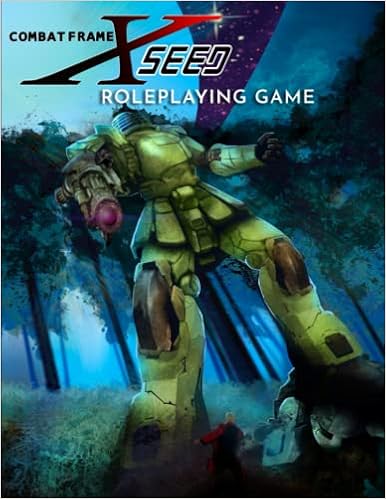
Ripped from the hit novels, the Combat Frame XSeed Roleplaying Game puts you in control of history's ultimate weapons. Stage hit-and-run strikes across the FMAS-Coalition border in your trusty Grenzie. Defend the L1 Colonies from ZoDiaC incursions in your bleeding edge Ein Dolph. Or play a soldier of fortune raiding desert trade routes in your junkyard Grenzmark I. The post-future is up to you. Forge your legend in a world of brutal mech combat. Play the Combat Frame XSeed Roleplaying game now!
Click on the link to go to the Amazon page, where you can get it for your Kindle, in paperback, or in hardcover.
And if you want to speak with the author and designer, you'll find him live tonight on Geek Gab hosting the retrospective of Final Fantasy Tactics
There's a new Josh Strife Hayes video on bad MMOs, which you can find here, but that's not today's topic. There isn't a new Geek Gab either. Rather, we're going back to Japan to talk more Macross news. This streamed live yesterday as part of Bandai's Tamashi Nations 2021 series, and yes this is in English; it opens with the Master of Ceremonies speaking in both Japanese and English, and then transitions to live translation through the cermoninal part. (The merch shilling in the back half of the stream is Japanese only.)
Let's get right to the big news: Global release of new and archival Macross media and merchandise.
That's right, Sony making Harmony Gold bend the knee has finally paid off and as I expected allowing some Robotech co-branding is meaningless in the big picture.
I cannot over-emphasize the importance of having this block lifted. It means that Macross is about to surge outside of Japan, due to reach co-equal popularity with Gundam, Mazinger, and Getter Robo now that it's able to freely reach the rest of the world.
And, for the merchandise and physical media collectors, it will mean cheaper prices due to reduced or eliminated need to import; those Valkyries could easily drop by up to half price in total, including shipping and handling, simply by being able to order from an in-country location instead of from a Japanese outlet that has to ship overseas.
It also opens the door for overseas live events, either in person--imagine being able to see Walkure playing at a theater or arena near you--or (more likely) being able to watch a live Japanese performance legally (as the Macross Plus event is likely a testbed for). That means that there is now the possibility to buy a ticket to the next Delta or Frontier live concert, hit up the nearby theater, and rock out with other local fans complete with the possibility for remote participation.
And if it works for this, then it opens the door for others to piggyback on that achievement; imagine being able to remotely attend Animelo Summer Live and watch all your favorite anisong artists just like you could in Japan. These events would, of course, would grow to include on-site availability of related merchandise to take home with you after the fact--posters, CDs, etc.--as well as promotions for artist fansites, official media channels, etc.
Yes, I imagine you'll be able to go to a Macross concert remotely, buy a Limited Edition Commemorative Valkyrie on site, and that ticket allows you to download/stream a legal digital copy after the fact sooner than later.
And that's just with what's current in the franchise library. They're not done yet; they just released a new Delta movie and I expect that Shoji Kawamori has something new in the works.
They took the time to spell out why the Macross franchise works and has its enduring appeal: Variable Fighters (which tracks to Courage), Love Stories (which tracks to Devotion), and Music (which tracks to Beauty). People worldwide respond to tales of Valor and Devotion in pursuit of Beauty, and that's what every Macross franchise entry nails with differing emphasis, even if some mixes of those elements prove far more popular (SDF Macross/DYRL & Frontier) over others.
All you'd need to do is add Faith and you have a winning formula for a Superversive mecha series, but that's for another post.
I am thrilled that my long-dreamed wish of Macross going global on its own terms is being fulfilled, and I can't wait to see what comes next.
Today's a good day.
In addition to a show of good sense from my neighboring Wisconsin, there's this movie event coming to select American venues for one night next month.
MACROSS PLUS MOVIE EDITION (with newly revised English subtitles) is making its way to US cinemas nationwide on December 14, tickets are ON SALE NOW! https://bit.ly/3BYednK
Subject to certain Corona-chan restrictions, of course.
Yeah, I'm happy about Kyle, but I'll save that for Sunday.
As much as I love mecha shows and tabletop RPGs, there's a very good reason for why the merger thereof has rarely had the desired effects: the appeal of a TV series and the appeal of a tabletop RPG are antithetical to one-another.
The former is a medium of narrative communication. You are a passenger on a roller-coaster ride. You passively observe the events depicted, have no presence in the situation, and can do nothing to change the outcome. The only question you have is to accept or reject what is offered; this is why reviews, formally published or informally shared, matter so much in the business of a series.
The latter is a medium of simulated problem solving, usually in the form of an explicit wargame scenario. You active participate in events, have resources to manage, and a series of objectives to achieve as well as constraints to work around and opposition to contend with. Your actions directly and immediately change outcomes, preferably in your favor. This is why reviews matter less than direct handling of the game's procedures and mechanics, and why--for multiplayer--user network size is a serious factor to consider before buying.
The conclusion is that the overlap of Brand X Mecha series fans and tabletop RPG fans is not as large as one might expect. The appeal of series-related merchandise, which a tabletop RPG would fall into, comes from fulfilling the fantasy of pretending to be a part of that series' narrative. Naturally, some series--usuall Real Robot shows--are far easier to make workable as games than others.
The solution is to stop making licensed games. The secondary conclusion is to not make a knockoff game with its own series continuity, which is where Dream Pod 9 screwed up with Heavy Gear and Jovian Chronicles. For all its faults, Palladium's Splicers did this right by giving a base scenario and (with only one supplement) leaving it up to individual campaigns to develop as they see fit.
Let's return to what many think is unviable: a Super Robot RPG.
This is how you do it:
Yes, for the record, this is what Mekton Zeta aimed for as a use-case and somehow missed because of the Real Robot fixation. Had the line continued past Starblade Battalion (itself a very good Real Robot distilling of a lot of classic Gundam-style tropes into an original setting), maybe we would have had this as a product entry.
And yes, for the record, I am aware that R. Talsorian still exists; it's just that Maximum Mike hasn't yet figured out that it's a waste of time trying to do new editions of his existing games when MZ (and CP2020) are still fit for purpose to this day. If he wanted to revive the profile of MZ, making this product as a MZ supplement would do it.
Go on, surprise me with "Cosmo Tiger Force". If the Pundit can make his stuff from his flat in Uruguay to an Anglophone global market, so can anyone everywhere with the time and the language skills.
